
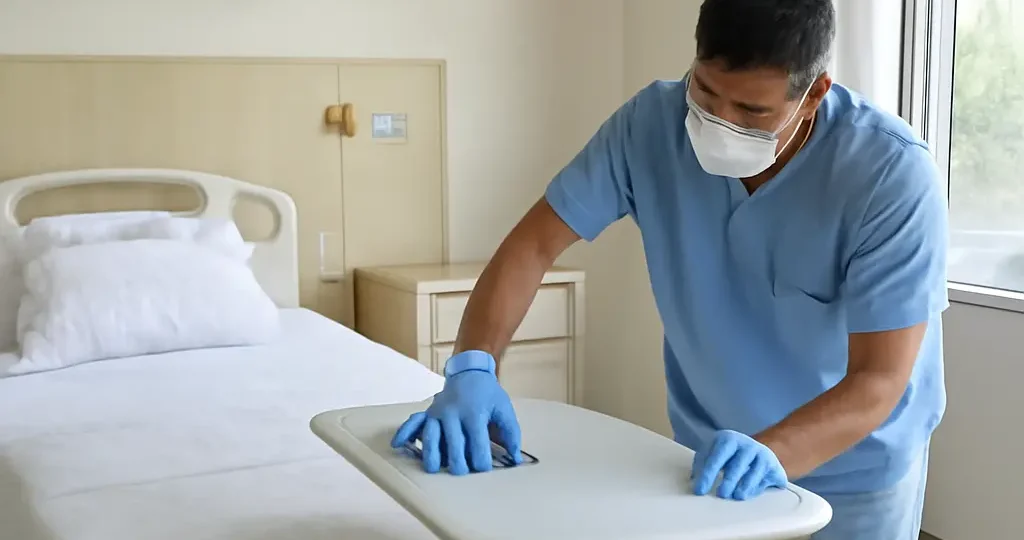

Hospital cleaning protocols are the policies and procedures used to reduce contamination on surfaces and equipment in patient-care environments. This year, hospitals are refining them with clearer risk-based rules, stronger attention to high-touch surfaces, improved monitoring, and targeted use of newer technologies—not simply adding more disinfectant. The changes matter: the U.S. Centers for Disease Control and Prevention (CDC) estimates that about 1 in 31 hospital patients has at least one healthcare-associated infection on any given day. Evidence-based cleaning, staff training, and reliable verification remain central to reducing preventable exposure.
Risk-based cleaning protocols guide hospital surface care
A risk-based cleaning protocol assigns the method and frequency of cleaning according to how a surface is used, how often it is touched, and the likelihood that it could transmit pathogens. The CDC’s environmental infection-control guidance distinguishes between high-touch surfaces—such as bed rails, call buttons, and door handles—and areas that are touched less often. The practical implication is that hospitals prioritize consistent cleaning of frequently handled surfaces while still following required schedules for floors, walls, and other environmental areas.
These protocols are not a substitute for hand hygiene, isolation precautions, or sterilization of reusable medical devices. Rather, they connect environmental services work with infection prevention: staff select an approved product, apply it as directed, and allow the surface to remain visibly wet for the label’s required contact time.
High-touch surfaces and routine daily cleaning
Routine cleaning removes soil and reduces microbial contamination during regular patient care. High-touch surfaces receive particular attention because repeated contact can create more opportunities for contamination and transfer. CDC guidance advises facilities to identify these surfaces locally, since traffic patterns and room layouts vary. Common examples include bed controls, bedside tables, bathroom fixtures, and shared clinical equipment.
A useful operational upgrade is to make cleaning responsibilities explicit: who cleans each item, when it is cleaned, which product is used, and how completion is documented. Clear ownership helps prevent gaps between environmental services staff and clinical teams, especially for equipment that moves between rooms.
Discharge and terminal cleaning
Terminal cleaning is the thorough cleaning and disinfection of a patient-care space after a patient leaves, before another patient uses it. It generally covers high-touch surfaces, low-touch surfaces, bathrooms, and relevant equipment, following the facility’s procedure and the disinfectant label. Hospitals may tailor the process to the patient’s infection status and the room’s use, while avoiding unnecessary practices that are not supported by evidence.
A reliable discharge-cleaning checklist can document room readiness, but a checklist alone does not prove that disinfection worked. Staff still need appropriate training, adequate supplies, and enough time to complete the specified steps.
Disinfectant selection and contact time shape cleaning results
A hospital disinfectant is a registered product used on environmental surfaces to inactivate specified microorganisms when applied according to its label. The U.S. Environmental Protection Agency (EPA) registers antimicrobial products and provides a searchable list of products with claims against particular pathogens. Hospitals should match the product to the intended organism and surface, check compatibility with equipment, and follow the labeled dilution, application, and contact-time instructions.
The term “contact time” refers to the period a disinfectant must remain wet on a surface to achieve the efficacy claimed on its label. Wiping a product dry too soon can undermine the intended result. Staff also need to observe safety directions, including ventilation and protective equipment requirements, and should not mix cleaning chemicals.
Targeted products for specific pathogens
Different disinfectants have different efficacy claims. For example, a facility responding to a suspected or confirmed pathogen should use a product whose label supports the required claim, rather than assuming that any general-purpose disinfectant is interchangeable. The EPA’s List N identifies products that meet its criteria for use against SARS-CoV-2; the agency advises users to follow label directions, including contact time.
Hospitals also consider practical factors such as material compatibility, odor, staff exposure, and workflow. A product that works in laboratory testing but is routinely misapplied in a busy care area is not a dependable protocol. Training and observation therefore matter as much as product selection.
Microfiber tools and reusable equipment
Microfiber cloths and mops can help capture soil and microorganisms when used and laundered correctly. Their performance depends on using clean materials, changing them at the required intervals, and preventing cross-contamination between rooms or zones. Reusable tools must be processed according to facility policy; equipment used for one patient should not be carried to another without appropriate cleaning and disinfection.
Hospitals increasingly make these details visible in work instructions—for example, by specifying cloth-change points and color-coded tools. Color coding is an organizational aid, not a disinfectant, so it must be paired with staff education and oversight.
Cleaning verification makes protocol performance measurable
Cleaning verification is the process of checking whether assigned cleaning tasks were completed to the facility’s standard. CDC guidance describes methods such as direct observation, fluorescent-marker assessment, and adenosine triphosphate (ATP) testing. Each measures something different: fluorescent markers show whether a marked area was wiped, ATP tests detect organic residue, and visual inspection identifies visible soil. None directly proves that a surface is free of every pathogen.
The CDC’s environmental cleaning toolkit encourages facilities to use monitoring results to identify missed tasks, provide feedback, and improve systems. Verification works best as a quality-improvement tool rather than a punitive scorecard: teams can examine patterns by unit, surface, shift, or cleaning step and then adjust training or workflow.
Fluorescent markers and direct observation
A fluorescent marker is an invisible or difficult-to-see substance applied to selected surfaces before cleaning. Afterward, staff use a detection light to check whether the mark remains. This provides a relatively direct indication that the surface was wiped, although it does not establish that the correct disinfectant was used or that its contact time was met.
Direct observation can assess whether staff follow the full procedure, including product use and sequence. Because observation may influence behavior and requires staff time, hospitals often combine it with other measures rather than relying on it alone.
ATP testing and data-driven feedback
ATP testing uses a swab and handheld reader to estimate organic material remaining on a surface. It can provide rapid feedback, but results are not a direct count of infectious organisms and may vary by surface and testing conditions. Facilities should interpret results against locally established thresholds and avoid presenting ATP readings as proof of pathogen elimination.
The most useful data connect monitoring to action: repeat misses may indicate an unclear assignment, a hard-to-clean surface, insufficient staffing, or a training need. Tracking completion and verification together gives infection-prevention and environmental-services leaders a more informative picture than either measure alone.
Newer technologies supplement—not replace—manual cleaning
Hospitals may use ultraviolet (UV-C) devices, hydrogen-peroxide systems, or automated dispensing and tracking tools as additions to established cleaning. These technologies can support particular workflows, such as room turnover, but they do not remove visible soil and do not eliminate the need for manual cleaning and disinfection. Their effectiveness depends on correct deployment, room conditions, equipment maintenance, and the organism and surfaces involved.
A 2017 cluster-randomized BETR Disinfection study, published in The Lancet, evaluated adding several enhanced terminal-room disinfection strategies to standard practices in nine hospitals. The study found that adding UV-C to standard cleaning reduced acquisition or infection with certain target organisms among patients entering rooms previously occupied by affected patients. The result supports targeted use in appropriate settings, not the assumption that one device can replace routine protocols.
UV-C devices for selected rooms
UV-C disinfection uses short-wavelength ultraviolet light to damage microbial genetic material. A device is generally used after manual cleaning, with the room unoccupied and configured according to manufacturer and facility instructions. Shadows, distance, room geometry, and exposure time can affect performance, so device placement and cycle documentation are important.
Hospitals considering UV-C should define which rooms qualify, how staff confirm the cycle ran, and how the technology fits into turnaround time. Safety controls are essential because direct exposure can injure eyes and skin.
Hydrogen-peroxide systems and workflow controls
Some facilities use vaporized or aerosolized hydrogen-peroxide systems for selected terminal-disinfection applications. These systems require controlled access, equipment-specific procedures, and appropriate clearance before a room is reoccupied. They are not equivalent to wiping a surface with a liquid disinfectant, and staff must follow the device’s validated operating instructions.
Before adopting an automated system, hospitals can assess the evidence for the intended use, room throughput, staffing requirements, and compatibility with their existing infection-prevention program. Pilot testing and outcome review help determine whether the added step improves the local process.
Staffing, training, and accountability sustain protocol upgrades
A cleaning protocol succeeds only when staff can perform it consistently. Environmental services personnel need role-specific instruction on pathogens, product labels, personal protective equipment, room sequencing, equipment handling, and what to do when supplies or time are inadequate. CDC guidance emphasizes education, training, and monitoring as core components of environmental cleaning programs.
Hospitals can strengthen accountability by involving environmental-services staff in protocol design, providing competency checks, and sharing monitoring results with frontline teams. The Association for the Health Care Environment’s practice resources likewise treat environmental services as a specialized healthcare function, rather than a generic housekeeping task.
Standard work and onboarding
Standard work translates policy into repeatable steps for a specific room or task. Visual job aids, demonstrations, and return demonstrations can help new and existing employees apply procedures consistently. Refresher training is particularly useful when products, equipment, patient populations, or infection-control recommendations change.
Hospitals should also ensure that staffing plans account for the time required to meet contact times and clean complex rooms. If workloads make the written protocol impossible to complete, the remedy is operational redesign—not merely another reminder to work faster.
A practical hospital upgrade checklist
Facilities reviewing their cleaning programs can use a short improvement cycle:
- Map high-touch surfaces and assign clear cleaning ownership.
- Confirm disinfectants have the necessary EPA registration and pathogen claims.
- Check that staff understand dilution, wet contact time, and surface compatibility.
- Use a defined verification method and explain what its results can—and cannot—show.
- Review misses with frontline staff and correct workflow, training, supply, or staffing problems.
- Evaluate automated technologies for a specific use case before expanding them.
Conclusion: reliable hospital cleaning depends on evidence and execution
The protocols hospitals are upgrading this year center on risk-based surface care, correct disinfectant use, measurable verification, targeted technology, and stronger staff support. CDC guidance and the EPA’s product-label system provide a foundation, while research on enhanced terminal disinfection shows that additional tools can help in selected circumstances. The broader lesson is that no product or machine compensates for unclear responsibility, insufficient training, or a process that cannot be completed as written.
Hospital leaders can start by reviewing high-touch-surface assignments, checking product contact-time practices, and discussing monitoring results with environmental-services teams. For further guidance, consult current CDC environmental infection-control resources, EPA disinfectant listings, and peer-reviewed research before changing local procedures.
Sources: Centers for Disease Control and Prevention, About Antimicrobial Resistance and Healthcare-Associated Infections, https://www.cdc.gov/healthcare-associated-infections/about/index.html; Centers for Disease Control and Prevention, Environmental Cleaning Procedures, https://www.cdc.gov/healthcare-associated-infections/hcp/cleaning-global/procedures.html; Centers for Disease Control and Prevention, Best Practices for Environmental Cleaning in Healthcare Facilities in Resource-Limited Settings, https://www.cdc.gov/healthcare-associated-infections/hcp/cleaning-global/; U.S. Environmental Protection Agency, List N: Disinfectants for Coronavirus (COVID-19), https://www.epa.gov/pesticide-registration/list-n-disinfectants-coronavirus-covid-19; Anderson, D. J., et al., “Enhanced terminal room disinfection and acquisition and infection caused by multidrug-resistant organisms and Clostridium difficile (the BENEFIT study): a cluster-randomised, multicentre, crossover study,” The Lancet, 2017, https://doi.org/10.1016/S0140-6736(16)31588-4; Association for the Health Care Environment, Practice Guidance and Resources, https://www.ahe.org/.