
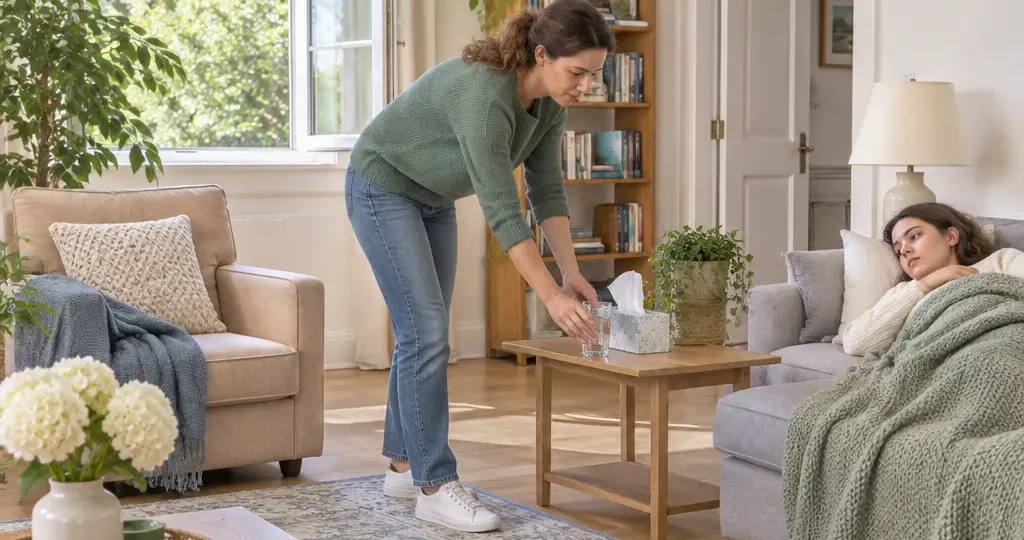

Caring for a sick family member at home means providing practical support while reducing your own exposure to the germs that may be causing their illness. The safest approach depends on the infection, but commonly recommended steps include improving ventilation, washing hands, avoiding shared personal items, cleaning high-touch surfaces, and using a well-fitting mask when close contact is necessary. These precautions matter: the U.S. Centers for Disease Control and Prevention (CDC) estimates that flu has caused millions of illnesses in the United States in recent seasons, while COVID-19 and other respiratory viruses can also spread within households. This guide explains how to assess risk, organize caregiving, reduce transmission, respond to symptoms, and protect people at higher risk.
Preventing Infection While Caring for a Sick Family Member at Home
Home infection prevention is the set of everyday measures used to reduce the chance that illness will spread from one person to another in a household. The CDC advises people with respiratory symptoms to stay away from others as much as possible, improve cleaner-air practices, and use added precautions when returning to normal activities. No single measure guarantees protection; combining measures is more reliable because viruses can spread through air, close contact, and contaminated hands or surfaces, depending on the pathogen.
The right plan begins with identifying the likely illness and the caregiver’s own vulnerabilities. Respiratory infections such as influenza, COVID-19, and respiratory syncytial virus (RSV) call for particular attention to air and close-range exposure. Gastrointestinal illnesses such as norovirus make soap-and-water handwashing and careful bathroom cleaning especially important. Follow instructions from the patient’s clinician or public-health authority, since precautions and isolation periods can differ by illness.
Assess the illness and household risk
Risk assessment means considering how the illness spreads, how sick the family member is, and whether anyone in the home is more likely to become seriously ill. Older adults, infants, people with certain chronic conditions, and people with weakened immune systems may need additional protection. Contact a healthcare professional promptly about testing and treatment if the sick person or caregiver is at elevated risk; treatments for some infections work best when started early.
If the diagnosis is unclear, use precautions appropriate to the symptoms while seeking medical advice. For respiratory symptoms, reduce face-to-face contact and increase airflow. For vomiting or diarrhea, avoid preparing food for others and prioritize thorough handwashing and bathroom hygiene. A practical household plan should also identify who can provide care if the primary caregiver becomes ill.
Set up a caregiving space
A caregiving space is an area that helps the sick person rest while limiting unnecessary household contact. If possible, have the person sleep in a separate room and use a separate bathroom. Keep commonly needed items—water, tissues, a lined wastebasket, thermometer, and prescribed medicines—nearby so caregivers do not need to make frequent trips.
When a separate room or bathroom is not available, increase distance when practical, improve ventilation, and clean shared bathroom touchpoints after use. Avoid visitors, especially people at higher risk of severe illness. Explain the plan in simple terms to children and other household members, and make sure everyone knows how to reach the caregiver or emergency services.
Reducing Exposure to Germs During Hands-On Care
Exposure reduction means limiting the amount of infectious material a caregiver encounters during close contact. For respiratory illnesses, shared indoor air and close-range breathing are important concerns, so ventilation, distance, and masks can complement one another. For illnesses spread through contaminated hands or surfaces, hand hygiene and careful handling of laundry, tissues, and waste are central. These practices are most useful when matched to the likely route of transmission rather than applied as a substitute for medical advice.
Improve ventilation and use masks when appropriate
Ventilation is the movement of outdoor air into an indoor space and the removal or filtering of indoor air. The CDC recommends bringing in fresh air, using exhaust fans, and considering portable air cleaners with appropriately sized high-efficiency particulate air (HEPA) filters. Open windows when weather and safety allow, and avoid directing a fan’s airflow from the sick person toward other people.
A well-fitting mask can reduce exposure during close contact with someone who has a respiratory infection. The caregiver can wear a high-quality, well-fitting mask, and the sick person can wear one if they can do so safely and comfortably. A mask should not be placed on a child under age two or on anyone who cannot remove it without help. Masks are not a substitute for ventilation or distance, but they can add protection when caregiving requires entering the sick person’s room.
Wash hands and avoid touching the face
Hand hygiene is cleaning hands to remove or inactivate germs. The CDC recommends washing with soap and clean running water for at least 20 seconds, particularly after contact with bodily fluids, used tissues, or bathroom surfaces and before preparing food or eating. If soap and water are unavailable, use hand sanitizer containing at least 60% alcohol, except when hands are visibly dirty or when dealing with certain stomach viruses for which soap and water are especially important.
Caregivers should avoid touching their eyes, nose, and mouth with unwashed hands. Keep soap, paper towels, and a lidded wastebasket accessible. Gloves may be useful when cleaning bodily fluids or handling soiled items, but gloves do not replace handwashing: remove them carefully and wash hands afterward.
Clean shared surfaces and handle laundry safely
Routine cleaning focuses on frequently touched surfaces such as doorknobs, faucets, light switches, counters, and bathroom fixtures. Follow the product label for disinfectant contact time and ventilation, and never mix cleaning products. For surfaces contaminated with vomit, diarrhea, or other bodily fluids, use a disinfectant labeled for the relevant pathogen when available and follow its instructions.
Handle used tissues and laundry with minimal shaking, and wash hands after taking items to the washer or disposing of waste. Use the warmest appropriate water setting and dry items completely, following fabric-care directions. Avoid sharing towels, drinking glasses, utensils, toothbrushes, or other personal items while someone is sick.
Supporting Recovery While Protecting the Caregiver
Safe caregiving balances the sick person’s comfort and monitoring needs with the caregiver’s health. A simple written routine can prevent missed doses, reduce unnecessary trips into the sick person’s space, and make it easier for another household member to take over. Record medicines as directed by a clinician, fluids, symptoms, and any changes in breathing or alertness; do not give medicines that are not appropriate for the person’s age or medical conditions.
Plan care tasks and share responsibility
Task planning means grouping necessary care activities—such as bringing meals, checking temperature, and delivering medicines—so the caregiver can limit repeated close contact. Assign one primary caregiver when feasible, but arrange a backup. If several people must help, make sure each understands the household precautions and knows where supplies are kept.
Caregivers should also protect their own basic needs. Sleep, fluids, regular meals, and breaks support safe decision-making and reduce burnout. If the caregiver develops symptoms, they should limit contact with others where possible, test or seek advice as appropriate, and hand over care if another safe caregiver is available.
Know when to seek medical help
Home care is not a substitute for urgent medical assessment. Seek emergency help for warning signs such as severe difficulty breathing, persistent chest pain or pressure, new confusion, inability to wake or stay awake, bluish or gray lips or skin, or signs of severe dehydration. In children, concerning signs can include fast or labored breathing, unusual lack of responsiveness, or inability to keep fluids down.
Contact a healthcare professional if symptoms worsen, last longer than expected, or involve a person at increased risk of complications. The CDC notes that influenza antiviral treatment is most effective when started early, and COVID-19 treatment options also have time limits. Ask a clinician or pharmacist about eligibility, medication interactions, and the appropriate next steps rather than waiting for severe symptoms.
Use a practical household checklist
- Identify the likely illness and ask a healthcare professional about testing, treatment, and precautions.
- Set up a resting area, reduce close contact, and improve indoor airflow where possible.
- Keep masks, soap, tissues, a thermometer, and cleaning supplies available.
- Wash hands at key moments and avoid sharing personal items.
- Clean high-touch surfaces and handle laundry and waste carefully.
- Monitor symptoms, keep a care log, and know the warning signs that require urgent help.
- Arrange backup care and protect the caregiver’s own rest and health.
Conclusion: A Layered Plan Protects the Whole Household
Caring for a sick family member at home is safer when household risk assessment, a well-organized care space, ventilation, masks when appropriate, hand hygiene, and targeted cleaning work together. The exact precautions depend on the illness, and people at higher risk should seek clinical advice early. Use the checklist to prepare, monitor the sick person, and share care responsibilities; consult current CDC guidance and a healthcare professional for illness-specific advice.
Sources: Centers for Disease Control and Prevention, Preventing Spread of Respiratory Viruses When You’re Sick, https://www.cdc.gov/respiratory-viruses/prevention/precautions-when-sick.html; Centers for Disease Control and Prevention, Taking Steps for Cleaner Air for Respiratory Virus Prevention, https://www.cdc.gov/respiratory-viruses/prevention/air-quality.html; Centers for Disease Control and Prevention, About Handwashing, https://www.cdc.gov/clean-hands/about/index.html; Centers for Disease Control and Prevention, Cleaning and Disinfecting Your Home, https://www.cdc.gov/hygiene/about/cleaning-and-disinfecting-your-home.html; Centers for Disease Control and Prevention, Signs and Symptoms of Flu, https://www.cdc.gov/flu/signs-symptoms/index.html; Centers for Disease Control and Prevention, Treatment of Flu, https://www.cdc.gov/flu/treatment/index.html; Centers for Disease Control and Prevention, COVID-19 Treatment, https://www.cdc.gov/covid/treatment/index.html