
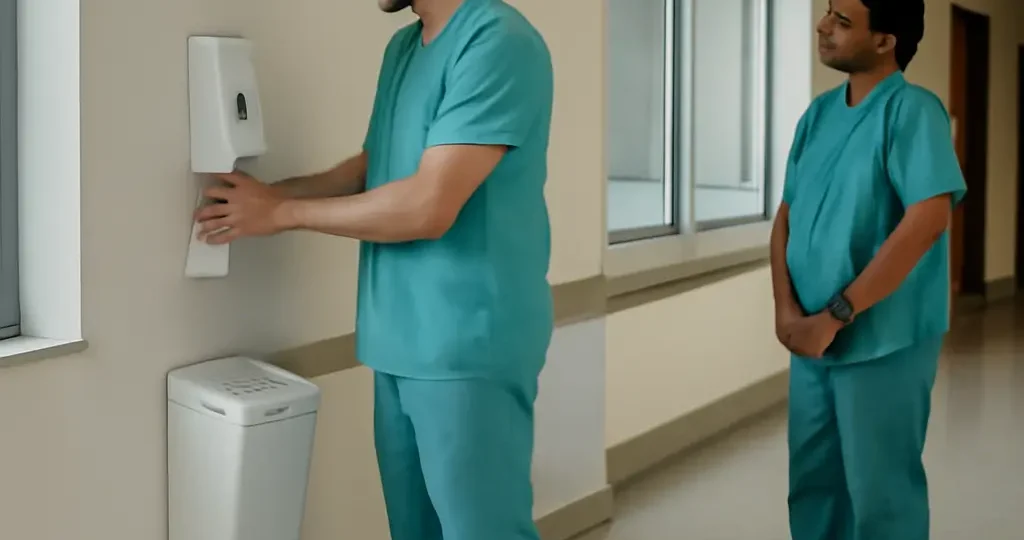

Infection control teams help prevent infections linked to healthcare, but their effectiveness can be undermined by routine, preventable mistakes: incomplete hand hygiene, inconsistent use of personal protective equipment, weak surveillance, delayed communication, and failure to turn data into action. The Centers for Disease Control and Prevention (CDC) estimates that, on any given day, about one in 31 U.S. hospital patients has at least one healthcare-associated infection (HAI). Avoiding these errors requires more than policies on paper: teams need reliable measurement, clear ownership, practical training, and follow-through with frontline staff.
Preventing Errors in Daily Infection Control Practice
Infection prevention and control (IPC) is the coordinated work of reducing the spread of infections in healthcare settings. The World Health Organization (WHO) describes IPC as a practical, evidence-based approach that prevents avoidable harm to patients and health workers. CDC guidance likewise emphasizes using core practices—such as hand hygiene, environmental cleaning, and appropriate precautions—consistently, rather than treating infection prevention as a task owned only by specialists.
The scale of the problem makes everyday reliability important. CDC’s National Healthcare Safety Network tracks infections including central line-associated bloodstream infections, catheter-associated urinary tract infections, surgical-site infections, and ventilator-associated events. These measures support comparison and prevention, but a dashboard alone cannot protect patients. Teams must interpret results correctly, verify what is happening at the bedside, and act on recurring gaps.
Treating policy as proof of practice
A written protocol is a standard for care, not evidence that care reliably follows it. A common mistake is to equate staff education, a signed acknowledgment, or the existence of a policy with consistent implementation. Infection control leaders should compare policy requirements with direct observations, supply availability, workflow, and incident data. If staff cannot find the right protective equipment quickly, for example, retraining alone will not fix the underlying problem.
Using audits without feedback or follow-through
An audit is a structured check of whether a required practice is being performed. Counting observations without sharing findings or assigning corrective action turns measurement into paperwork. CDC’s hand-hygiene guidance supports monitoring and feedback as parts of an improvement program. Teams should report results promptly, explain what the measure means, and agree on a specific next step with the staff responsible for the process.
Once teams recognize that policies and audits need operational follow-through, they can address the frontline practices most likely to interrupt transmission.
Improving Hand Hygiene and Personal Protective Equipment Use
Hand hygiene and correct personal protective equipment (PPE) use are foundational infection prevention practices. WHO’s hand-hygiene guidance identifies key moments for cleaning hands during care, including before touching a patient and after exposure to body fluids. CDC recommends selecting PPE according to the anticipated exposure and following safe procedures for putting it on and removing it. Mistakes often arise when teams focus on completion rather than whether the action occurred at the right time and in the right way.
Counting hand-hygiene events instead of checking the right moments
Hand hygiene means cleaning hands with soap and water or an alcohol-based hand rub when indicated. A frequent measurement error is to record a general number of hand-cleaning events without assessing whether staff cleaned their hands at the required opportunities. WHO’s “Five Moments for Hand Hygiene” framework helps observers assess those opportunities, including before an aseptic task and after touching a patient’s surroundings. Teams should use consistent observation criteria and interpret results alongside workflow and access to sinks or dispensers.
Overlooking glove changes and hand cleaning
Gloves do not replace hand hygiene. CDC advises cleaning hands before putting on gloves when indicated and after removing them; gloves should also be changed between tasks when contamination could be transferred. A common lapse is wearing the same gloves while moving from a contaminated site to a clean task, or touching environmental surfaces and then continuing patient care. Infection control teams can reduce this risk by observing complete care sequences rather than checking glove use in isolation.
Treating PPE as a one-size-fits-all checklist
PPE includes items such as gloves, gowns, masks, and respirators, selected according to the task, exposure risk, and transmission-based precautions. A routine error is using the wrong item, wearing it incorrectly, or removing it in a way that contaminates clothing or hands. CDC’s infection-control guidance recommends training staff in selection, use, and safe removal. Teams should also confirm that PPE is available in the right sizes and locations and that respirator programs include required fit testing and training where applicable.
Strengthening Surveillance, Reporting, and Data Quality
Surveillance is the systematic collection, analysis, and interpretation of infection-related information to guide prevention. CDC’s National Healthcare Safety Network provides standardized definitions and reporting methods for participating healthcare facilities. A crucial daily mistake is treating surveillance as a reporting obligation instead of a tool for identifying risks and preventing additional infections.
Applying case definitions inconsistently
A surveillance case definition specifies the criteria used to classify an event for monitoring. If teams interpret definitions differently across units or over time, apparent changes in infection rates may reflect inconsistent classification rather than a true change in risk. CDC’s NHSN protocols are designed to standardize surveillance; teams should use the current applicable protocol, document decisions, and review borderline cases with trained personnel. Rates should be compared only when the definitions and denominators are appropriate.
Missing denominator and device-use context
An infection rate needs a meaningful denominator. For device-associated infections, teams commonly interpret event counts alongside device-days—the number of days patients are exposed to a specific device—using the relevant NHSN method. Reporting only a raw count can mislead: a unit with more patients or greater device use may have more events even when its risk per exposure differs. Reviewing device utilization alongside infection outcomes helps teams identify whether reducing unnecessary device use is part of the solution.
Delaying escalation of a possible cluster
A cluster is a grouping of cases that may indicate a shared source or transmission event. Waiting for perfect certainty before notifying clinical, laboratory, and public-health partners can delay investigation. Teams should establish clear escalation thresholds, promptly verify unusual patterns, and preserve relevant information such as patient locations, timelines, procedures, and organism results. CDC outbreak-investigation guidance emphasizes coordinated case finding and timely communication as investigations develop.
Reliable surveillance reveals where problems may be occurring; the next challenge is translating those signals into safe workflows, especially around devices and the care environment.
Managing Devices, Cleaning, and Transmission-Based Precautions
Many preventable risks arise during routine device care, room cleaning, and isolation practice. These activities cross departmental boundaries, so infection control teams can miss problems when they focus only on clinical staff or formal audits. Effective prevention connects device necessity, care technique, environmental services, and the patient’s route through the facility.
Failing to review whether a device is still necessary
Device stewardship means using invasive devices only when clinically indicated and removing them as soon as they are no longer needed. Catheters and central lines can create pathways for infection, so a common daily mistake is allowing them to remain in place without a documented reason or regular review. CDC prevention guidance supports appropriate device use and reliable maintenance practices. Teams can build necessity checks into rounds and prompt clinicians to consider removal each day.
Assuming cleaning happened because it was assigned
Environmental cleaning is the removal of soil and contamination from surfaces and equipment using the facility’s approved methods and products. Assigning a room or item to a department does not guarantee that it was cleaned correctly, at the correct frequency, or with the required contact time. CDC environmental infection-control guidance stresses appropriate cleaning and disinfection procedures. Teams should clarify responsibility for shared equipment, train staff on product instructions, and use appropriate checks to identify missed high-touch surfaces.
Using isolation precautions inconsistently
Transmission-based precautions are additional measures used for patients known or suspected to have infections spread by contact, droplets, or airborne routes. A preventable mistake is delaying precautions while waiting for a final result when clinical suspicion or facility protocol calls for action. Another is leaving signage or room supplies out of date after a patient’s status changes. CDC guidance recommends applying precautions according to the suspected or confirmed transmission risk and ensuring staff understand the required room entry, PPE, and equipment practices.
Building Communication, Training, and Accountability
Infection prevention depends on people coordinating across clinical units, laboratories, environmental services, facilities, and leadership. Errors persist when responsibilities are vague, training is generic, or staff fear reporting problems. A strong safety culture makes it easier to raise concerns early and to correct system weaknesses without relying on blame.
Training once and assuming competence lasts
Competency-based training verifies that a person can perform a task to the required standard, rather than merely confirming attendance. One-time orientation can be inadequate when procedures change, staff work in unfamiliar settings, or skills are performed infrequently. CDC guidance recommends education and training on infection prevention practices. Teams should provide role-specific instruction, observe performance where appropriate, and refresh training when audits, incidents, or workflow changes reveal a need.
Leaving handoffs and ownership unclear
A handoff transfers relevant information and responsibility between people or teams. Infection risks can be overlooked when responsibility for isolation status, device review, test follow-up, or room turnover is not explicit. Teams should define who acts, by when, and how completion is documented. For example, an unusual culture result needs a clear path from the laboratory to the clinical team and infection prevention staff, with escalation if the expected response does not occur.
Blaming individuals instead of fixing system conditions
A just culture encourages reporting and learning while maintaining appropriate accountability. When leaders respond to every lapse with blame, staff may conceal near misses or avoid raising concerns. Conversely, focusing only on individual behavior can obscure problems such as understaffing, confusing storage, poorly designed workflows, or unavailable supplies. Teams should investigate both what happened and the conditions that made it likely, then assign measurable corrective actions and check whether those actions worked.
Conclusion: Make Reliable Infection Prevention a Daily Practice
Common infection control mistakes are often ordinary process failures: treating policies as proof, auditing without feedback, misreading hand-hygiene performance, using PPE incorrectly, applying surveillance definitions inconsistently, delaying escalation, and leaving device, cleaning, or isolation responsibilities unclear. CDC’s estimate that roughly one in 31 U.S. hospital patients has an HAI on a given day underscores why these details matter.
Infection control teams can make progress by combining accurate data with direct observation, clear ownership, practical training, and prompt communication. Review one recurring risk at a time, involve the staff who perform the work, and verify that corrective actions improve practice. For further guidance, consult current CDC infection-prevention recommendations, NHSN protocols, and WHO IPC resources.
Sources: Centers for Disease Control and Prevention, “About HAIs,” https://www.cdc.gov/healthcare-associated-infections/about/index.html; Centers for Disease Control and Prevention, “Core Infection Prevention and Control Practices for Safe Healthcare Delivery in All Settings,” https://www.cdc.gov/infection-control/hcp/core-practices/index.html; Centers for Disease Control and Prevention, “National Healthcare Safety Network (NHSN),” https://www.cdc.gov/nhsn/index.html; Centers for Disease Control and Prevention, “Clinical Safety: Hand Hygiene for Healthcare Workers,” https://www.cdc.gov/clean-hands/hcp/clinical-safety/index.html; World Health Organization, “WHO Guidelines on Hand Hygiene in Health Care,” https://www.who.int/publications/i/item/9789241597906; Centers for Disease Control and Prevention, “Transmission-Based Precautions,” https://www.cdc.gov/infection-control/hcp/isolation-precautions/summary-recommendations.html; Centers for Disease Control and Prevention, “Guidelines for Environmental Infection Control in Health-Care Facilities,” https://www.cdc.gov/infection-control/hcp/environmental-control/; World Health Organization, “Infection prevention and control,” https://www.who.int/health-topics/infection-prevention-and-control