
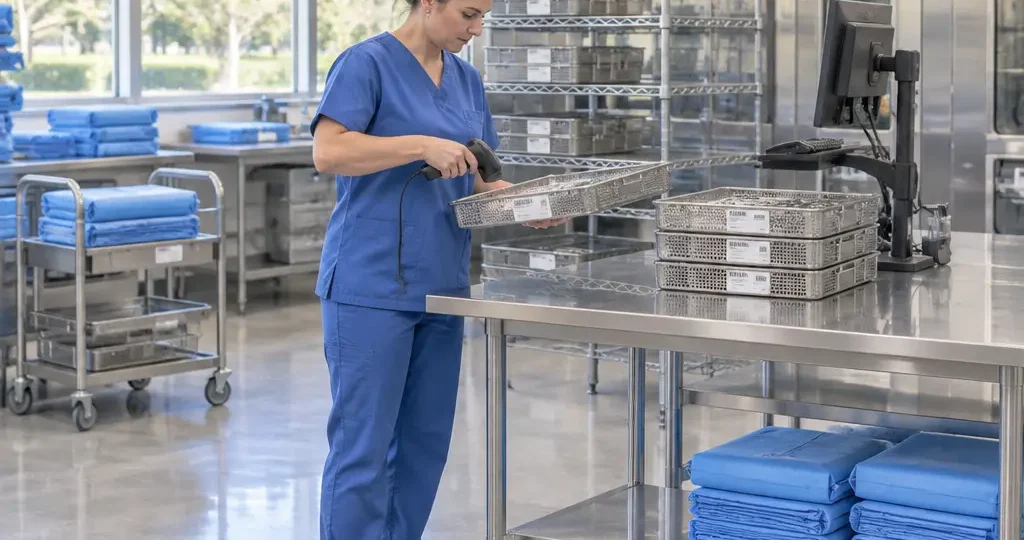

Medical device reprocessing is the controlled sequence that turns a used reusable device into one that is safe and ready for its next patient. Traceability means being able to connect each device or instrument set to its cleaning, inspection, packaging, sterilization, release, storage, and use records. A reliable system links these steps from the point of use through sterile storage, using standardized identification, documented checks, and electronic or paper records. The U.S. Centers for Disease Control and Prevention (CDC) identifies cleaning as a necessary first step before disinfection or sterilization, while the U.S. Food and Drug Administration (FDA) emphasizes that reusable devices must be reprocessed according to validated manufacturer instructions. Together, these principles show why traceability is both a patient-safety control and an operational requirement.
Reprocessing Traceability: Definition and Patient-Safety Attributes
Traceability in medical device reprocessing is the documented ability to follow a device’s identity and processing history across the care and sterile-processing workflow. The Association for the Advancement of Medical Instrumentation (AAMI), through its standards and guidance for sterile processing, frames safe reprocessing around controlled, documented processes and compliance with the device manufacturer’s instructions for use (IFU). In practical terms, traceability connects a device or tray to the people, equipment, cycle data, inspection results, and locations involved in its processing.
The concept includes related forms of tracking: instrument-level traceability, tray- or set-level traceability, sterilizer-load traceability, and patient-level linkage. These are not interchangeable. A load record may show that a cycle met its monitored parameters, but without a link to a specific tray and patient, it may not identify who could be affected by a later-reported processing issue.
Point-of-use identification and pre-cleaning
Point-of-use processing begins immediately after a procedure, before instruments leave the clinical area. Staff should identify the device or set, keep it moist when the IFU requires it, remove gross soil as directed, and transport it in a secure, designated container. This step is important because dried blood and tissue can make later cleaning less effective. CDC guidance stresses prompt cleaning before disinfection or sterilization; traceability records can document the procedure location, set identifier, collection time, and any exception, such as delayed transport or a missing instrument.
Cleaning, inspection, and assembly records
Cleaning removes soil and organic material so that subsequent disinfection or sterilization can work as intended. Staff should follow the device-specific IFU for disassembly, detergent, water quality, brushing, and automated cleaning. After cleaning, inspection verifies visible cleanliness, function, and completeness; assembly records can associate the set with the technician and inspection outcome. A tracking system should preserve the distinction between a completed cleaning cycle and a passed inspection: one does not prove the other.
Packaging, sterilization, and load release
Packaging protects cleaned devices and allows the selected sterilization process to reach the contents. Sterilization traceability should identify the sterilizer, cycle or load number, date, contents, operator, and relevant monitoring results. CDC guidance describes mechanical, chemical, and biological monitoring as complementary controls; a biological indicator provides evidence about the lethality of a sterilization process, while mechanical and chemical indicators provide different information about cycle conditions and exposure. Release procedures should follow facility policy, applicable standards, and device and sterilizer instructions. A record should also capture any failed indicator, cycle cancellation, or load quarantine.
Workflow Controls: Traceability From Use to Sterile Storage
Once the basic traceability attributes are defined, they can be organized into a sequence of custody and processing checkpoints. The aim is not merely to collect more data; it is to maintain reliable links between the device, its processing history, and its location. The FDA’s guidance on reprocessing reusable medical devices underscores that manufacturers’ validated instructions are central to safe processing, while CDC recommendations place cleaning and sterilization within broader infection-prevention practices.
Receiving and decontamination handoff
At receiving, staff reconcile incoming trays and devices against expected contents, identify damage or missing items, and record the handoff into the decontamination area. Unique barcodes, data-matrix codes, or other approved identifiers can reduce ambiguity, but the identifier must remain readable and compatible with the device and process. If a device cannot be scanned, a documented alternate method should preserve its identity rather than allowing it to proceed as an anonymous item.
Sterile storage, distribution, and status control
Sterile storage is the controlled holding and distribution of processed items until use. Records should show where a released tray is stored, whether its package remains intact, and when it is issued or moved. CDC guidance describes event-related sterility: package integrity and storage conditions matter, and a package compromised by moisture, tears, punctures, or other damage should not be treated as sterile. A location-aware system can help staff find a specific tray quickly and prevent unreleased, recalled, or quarantined items from being issued.
Patient and procedure linkage
Patient-level traceability links a processed item or tray to the procedure in which it was used. Where feasible, recording the device or tray identifier in the electronic health record or operating-room record creates a route from a patient back to the sterilization load and processing documentation. This linkage supports focused investigation if a load is later found to have a failed indicator, an incomplete record, or a suspected process deviation. It can also reduce the need for broad, poorly targeted notifications because affected devices and procedures can be identified more precisely.
Monitoring and Validation: Evidence That the Process Worked
Traceability is meaningful only when the records represent controlled, validated work. Validation establishes that a process can consistently achieve its intended result under specified conditions; routine monitoring and documentation help verify that the process remains within those conditions. AAMI standards, CDC recommendations, and FDA reprocessing guidance are important references, but facilities must apply the versions and requirements relevant to their devices, equipment, jurisdiction, and accreditation obligations.
Process indicators and release decisions
Mechanical records, chemical indicators, and biological indicators provide different forms of evidence and should be interpreted under the applicable sterilization instructions and facility policy. Mechanical monitoring records cycle parameters; chemical indicators show exposure to specified process conditions; biological indicators assess the ability of a process to inactivate highly resistant test organisms. No single indicator substitutes for correct cleaning, packaging, loading, validated cycle selection, and complete documentation. When results are unacceptable or missing, staff should follow established escalation, quarantine, investigation, and recall procedures rather than relying on assumptions.
Data quality, audits, and corrective action
A traceability program should be tested through routine audits of record completeness, scan compliance, cycle documentation, package status, and retrieval time. Useful measures include the percentage of trays with complete processing records, the rate of identification mismatches, the number of items quarantined for documentation gaps, and the time required to locate all devices in a questioned load. These are facility performance indicators, not universal benchmarks; organizations should set targets based on risk, baseline performance, applicable standards, and improvement plans. When an audit reveals a gap, corrective action should address the cause—such as workflow design, training, equipment, or identifier readability—not just the individual record.
Technology and Implementation: Building a Reliable Chain of Custody
Facilities may use paper logs, instrument-tracking software, barcode systems, or integrated sterile-processing platforms. Technology can improve retrieval and reduce transcription, but it cannot compensate for unclear responsibilities, poor data governance, or noncompliance with IFUs. The best design fits the clinical workflow and preserves a human-verifiable record when scanners, networks, or software are unavailable.
Barcodes, data matrices, and electronic records
A barcode or data-matrix identifier can associate a reusable instrument or tray with each processing event. Electronic records can then connect receiving, cleaning, assembly, sterilization, release, storage, and issue events. Implementation should account for durable marking, scanner placement, device compatibility, system access controls, audit trails, downtime procedures, and protection of patient information. A pilot in a limited set of high-use or high-risk trays can reveal scanning bottlenecks and data gaps before wider deployment.
Staff roles, training, and escalation
Traceability depends on coordinated work among clinical staff, sterile-processing technicians, infection preventionists, quality teams, biomedical or information-technology staff, and supply-chain personnel. Training should cover point-of-use handling, identification, IFU access, documentation, indicator interpretation, and how to stop and escalate when a required record or process result is absent. Clear ownership at each handoff helps prevent the common failure in which every department assumes another team has documented the event.
Practical Example: Investigating a Questioned Sterilization Load
Consider a facility that receives an alert that a sterilizer load may have an unacceptable monitoring result. With load-to-tray and tray-to-patient links, the team can identify the affected packages, check whether any were released, locate items in storage, and determine which procedures used them. The facility can then quarantine remaining items, follow its reporting and recall policy, review cycle records and equipment status, and coordinate clinical follow-up as indicated. Without those links, the response may require a broader manual search through case schedules, paper logs, and storage locations, increasing delay and uncertainty. This example illustrates the operational value of end-to-end records without implying that any specific incident or outcome occurred.
Conclusion: Making Traceability a Continuous Safety Practice
Medical device reprocessing traceability connects point-of-use handling to cleaning, inspection, packaging, sterilization, release, sterile storage, distribution, and patient use. The essential attributes are reliable identification, documented custody, validated processing, monitored release, accurate location records, and prompt retrieval. Facilities should compare their workflows with current CDC recommendations, FDA guidance, applicable AAMI standards, and manufacturer IFUs; audit real records; train staff on every handoff; and test whether a questioned load can be traced quickly and accurately. Strong traceability supports patient safety, focused investigations, and accountable operations across the reprocessing chain.
Sources: Centers for Disease Control and Prevention, Guideline for Disinfection and Sterilization in Healthcare Facilities, https://www.cdc.gov/infection-control/hcp/disinfection-sterilization/; U.S. Food and Drug Administration, Reprocessing of Reusable Medical Devices, https://www.fda.gov/medical-devices/products-and-medical-procedures/reprocessing-reusable-medical-devices; Association for the Advancement of Medical Instrumentation, ANSI/AAMI ST79: Comprehensive Guide to Steam Sterilization and Sterility Assurance in Health Care Facilities, https://www.aami.org/standards/featured-standards/ansi-aami-st79